Overview_001
In 2018 IKEA launched "Make Room for Life" across the UK and Ireland, a campaign and department rebuild examining how flexible, well-organised living rooms support the way people actually live at home. The Living Room department needed to present a wide, fast-changing seating offer in a way that was inspiring, easy to navigate, and commercially effective. The design challenge was translating IKEA's global Common Store Planning guidance into store-scale layouts that worked across varied footprints, while reinforcing low-price perception, surfacing top families, and supporting add-on sales throughout the customer journey.
Problem_002
The Living Room area needed to present a wide, fast-changing sofa and armchair range in a way that was inspiring, easy to navigate, and commercially effective, across stores with different footprints and evolving seasonal ranges. Customers struggled to get an immediate overview of what was available, price comparisons were unclear, and add-on sales opportunities were being missed. The brief required a flexible compact that could accommodate future range shifts, reinforce low-price perception at entry, and make the full seating offer readable in a single visit.
Pain Point 01
No clear range overview, customers couldn't quickly distinguish function (sleep/no-sleep), style, or price tier without significant browsing effort.
Pain Point 02
Price/quality ladders were invisible, lowest-price options weren't surfaced at entry, and high-end ranges lacked the storytelling context needed to justify the price.
Pain Point 03
Add-on sales and coordinated solutions were disconnected from the seating offer, cushions, throws, and lighting weren't driving complete-room purchases.
Research_003
Research was aligned to IKEA's Common Store Planning (CSP) guidance for FY18–FY19, a global framework developed from shopper behaviour studies and commercial performance analysis. Primary grouping logic was established by studying how customers shop by function first (does it convert to a bed?), then style, then family. Hot-spot strategy at aisle prolongations was validated against top-family commercial performance data, and competitor spatial analysis informed display technique decisions.
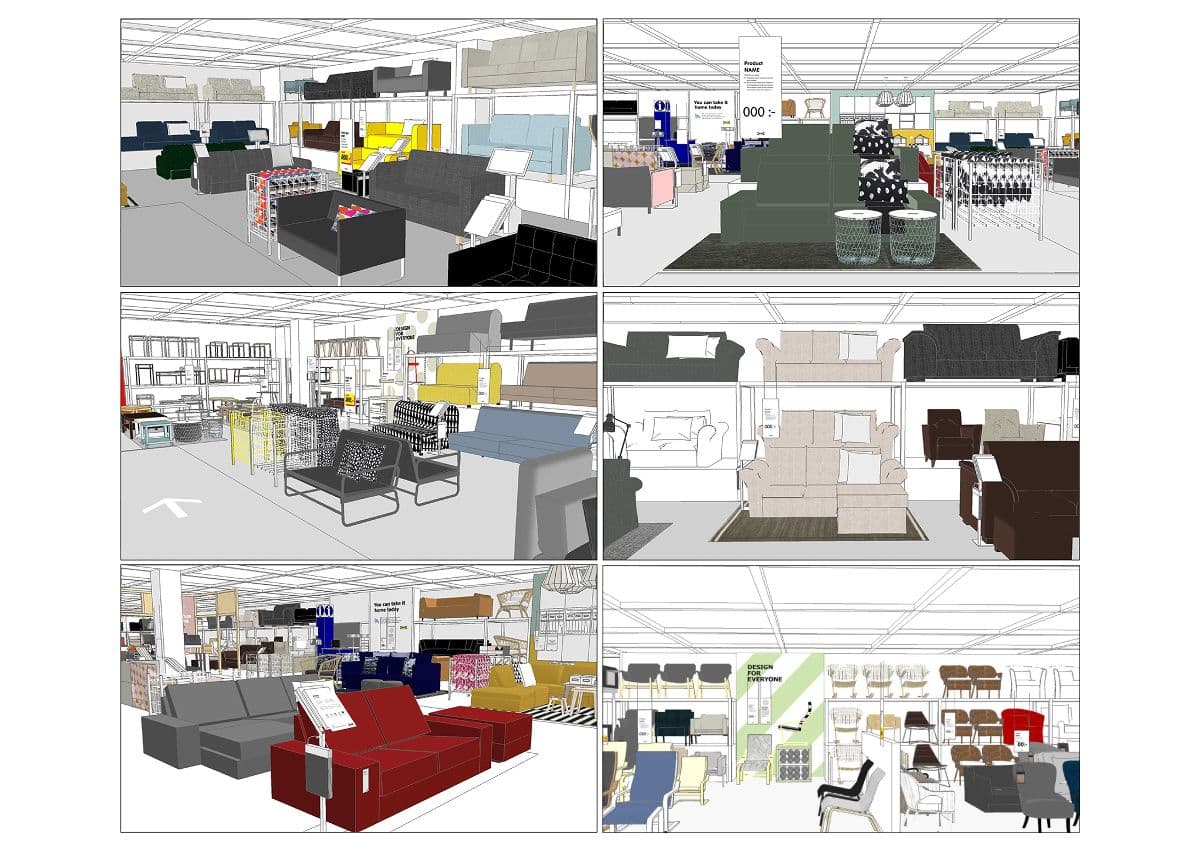
CSP guidance extract · Function → style → family grouping logic and hot-spot locations
Process_004
The process moved from global CSP guidance interpretation through macro planning, VM and communication integration, and inspiration/add-on sales design, translating brand-level strategy into store-scale decisions that worked across varied UK and Ireland footprints. Each phase required balancing global standards with local store constraints.
01
Macro Planning
Defined the Sofa compact (~521m²) and Armchair compact (~83m²) with low walls for clear sight lines and single flooring for flexibility. Identified hot-spot positions at aisle prolongations to carry top families, KIVIK, VIMLE, STRANDMON, and key commercial messages.
02
VM & Communication Integration
Established display racking for width-and-depth impressions, fronta/repetition for clarity, and A4 overview signs for families with many shape and fabric options. Managed price/quality ladders so customers could compare lowest, mid, and high-price options side by side.
03
Inspiration & Add-On Sales
Positioned activity podiums and perimeter breaks to punctuate the compact, support seasonality, and reinforce Democratic Design. Coordinated cushions, throws, and lighting with seating to encourage complete-room solutions.
04
Store Rollout Package
Developed a complete concept package, CAD plans, SketchUp elevations, VM playbooks, and finish/furniture specifications, sent to all UK & Ireland stores for local adaptation. Each store was entitled to adapt the general concept plan to their own layout.
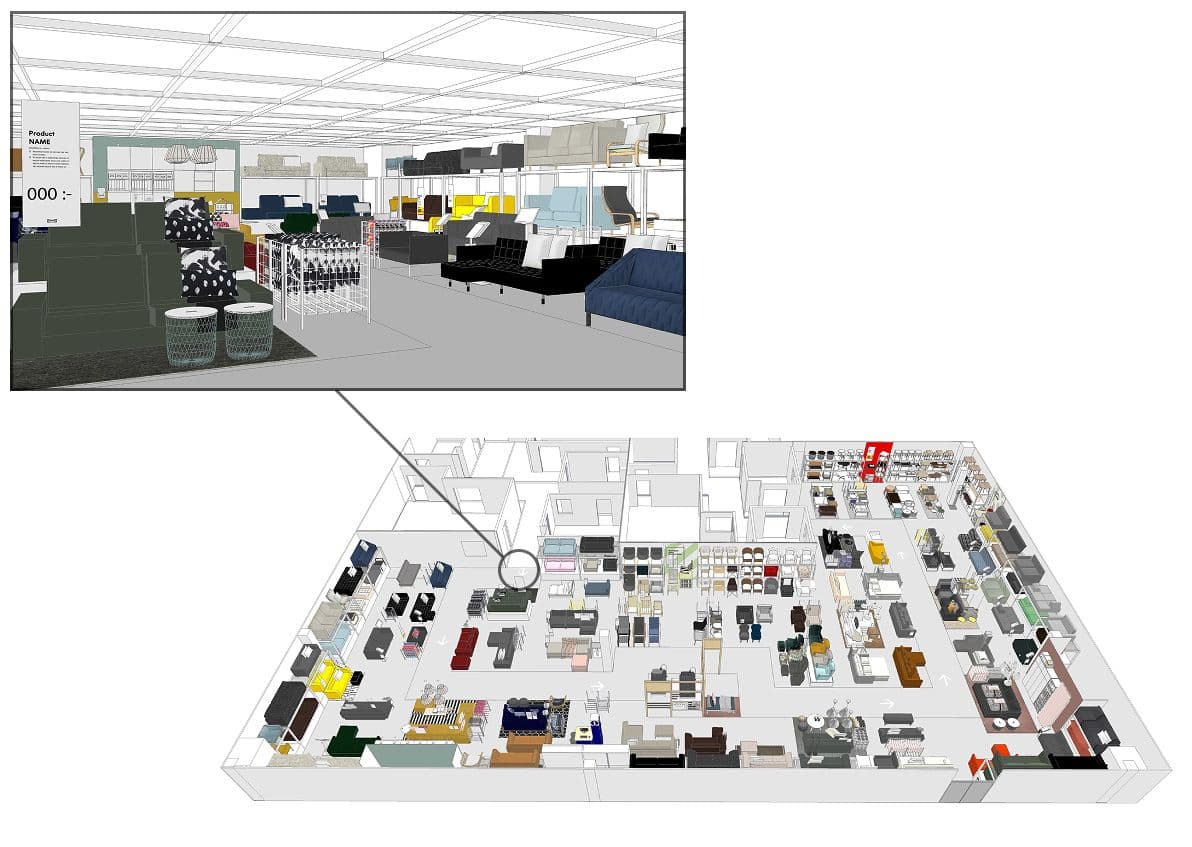
Combined compact floor plan · Sofa + Armchair zones, hot spots, and aisle prolongations
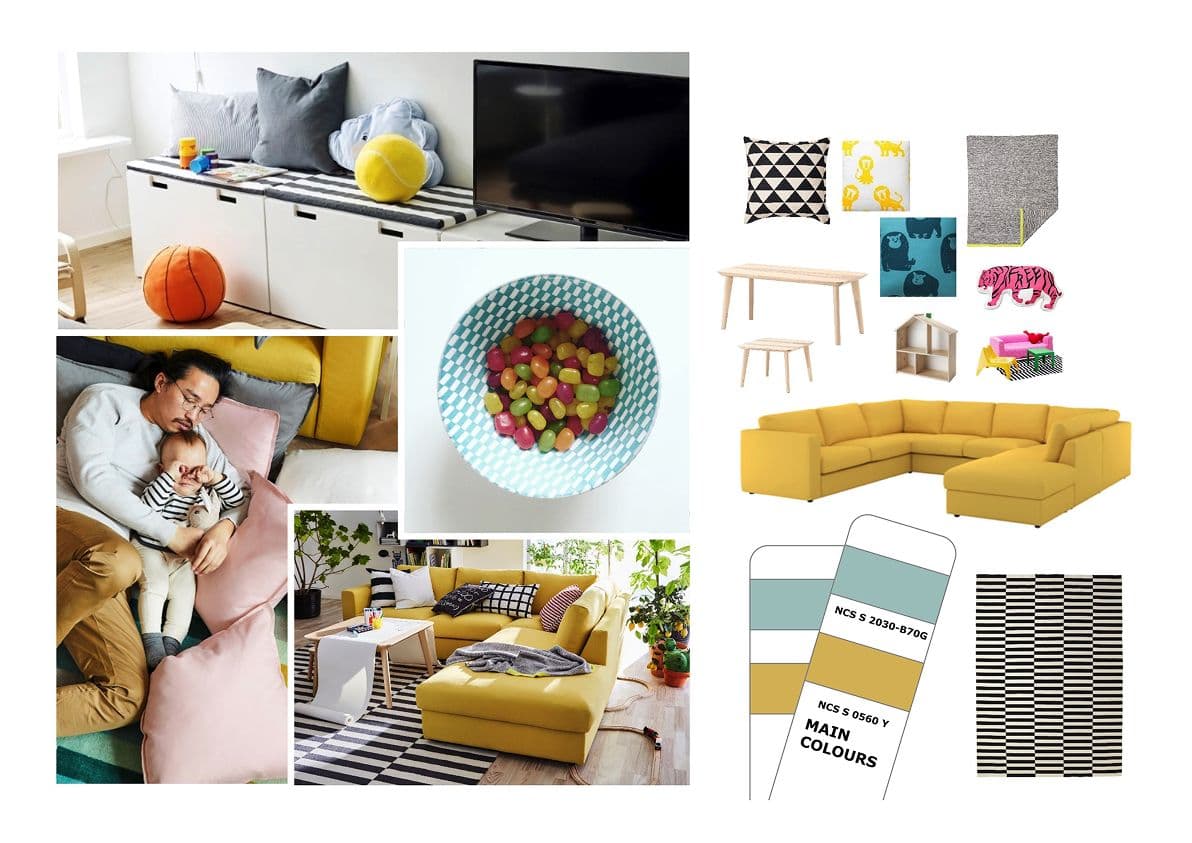
VM & communication · A4 overview signs, price ladders, and fabric sample stations
20+stores
UK & Ireland Rollout
Solution_005
A function-first Living Room department built around clear grouping logic, hot-spot strategy, and price/quality ladders, delivered as a complete concept package that each UK and Ireland store could adapt to their own footprint. The solution prioritised range overview and commercial clarity above everything else.
Grouping & Navigation
Sofas grouped by function first (no-sleep → sleep), then style, then family. Armchairs grouped by style → family and positioned centrally to keep the full seating offer together and coordination with sofas natural.
First Impressions & Hot Spots
Low-price perception surfaced at entry with accessible price signs on top families. Direct sight lines from aisle prolongations to coordinated solutions, VIMLE, FRIHETEN, ensured strong first impressions before customers entered the compact.
Price & Quality Ladders
Lowest, mid, and high-price tiers placed side by side for easy comparison. Lowest-price families (KNOPPARP, HAMMARN) clearly flagged; high-end ranges (STOCKHOLM 2017) framed with story and collection context to justify the price.
Add-On Sales & Coordination
Cushions, throws, and lighting positioned with seating throughout the compact. Curated collage setups for "Living with children" and "Small space living" supported add-on sales and gave customers permission to imagine the full room.
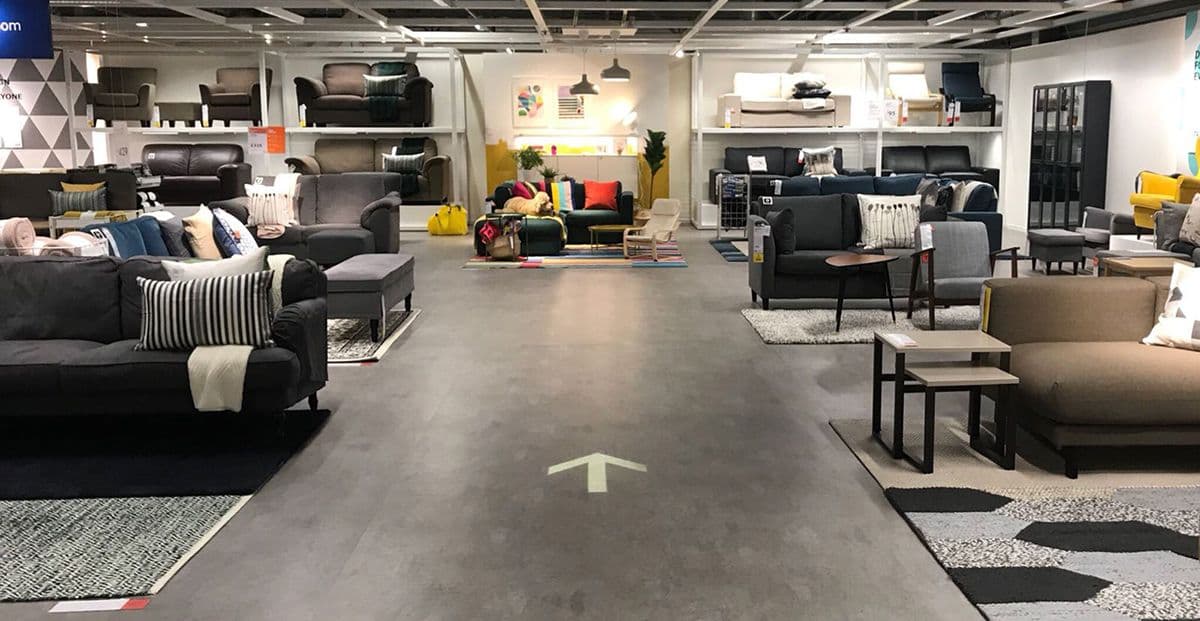
IKEA Leeds · Make Room for Life implementation
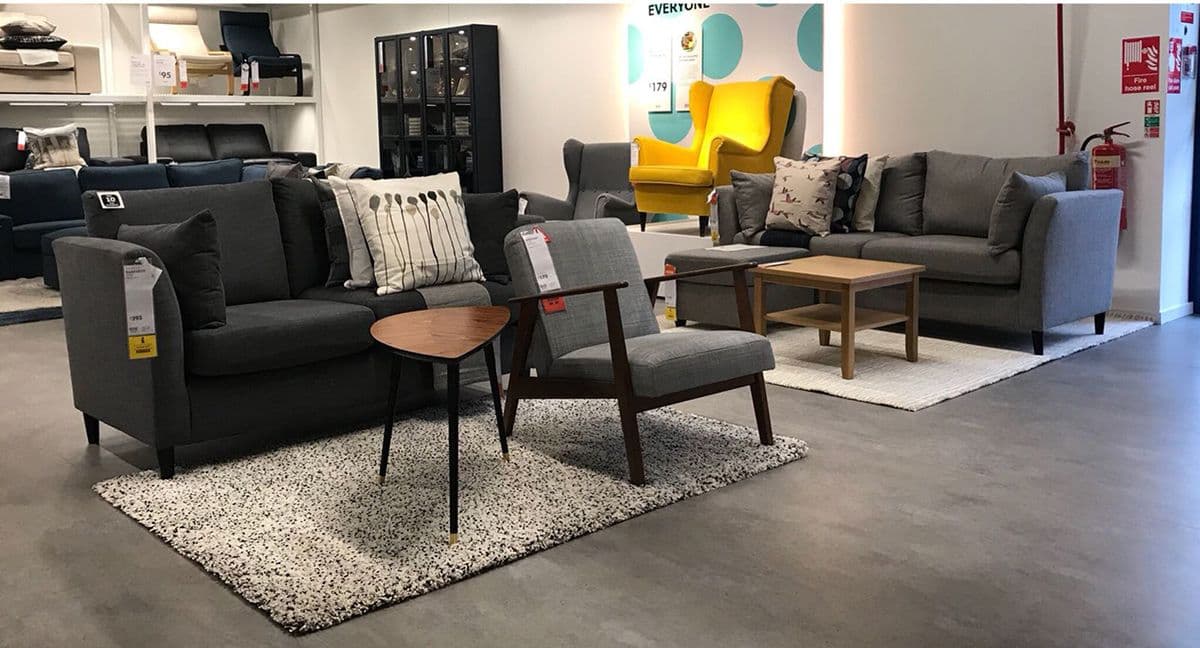
IKEA Leeds · Armchair compact and Democratic Design hot spot
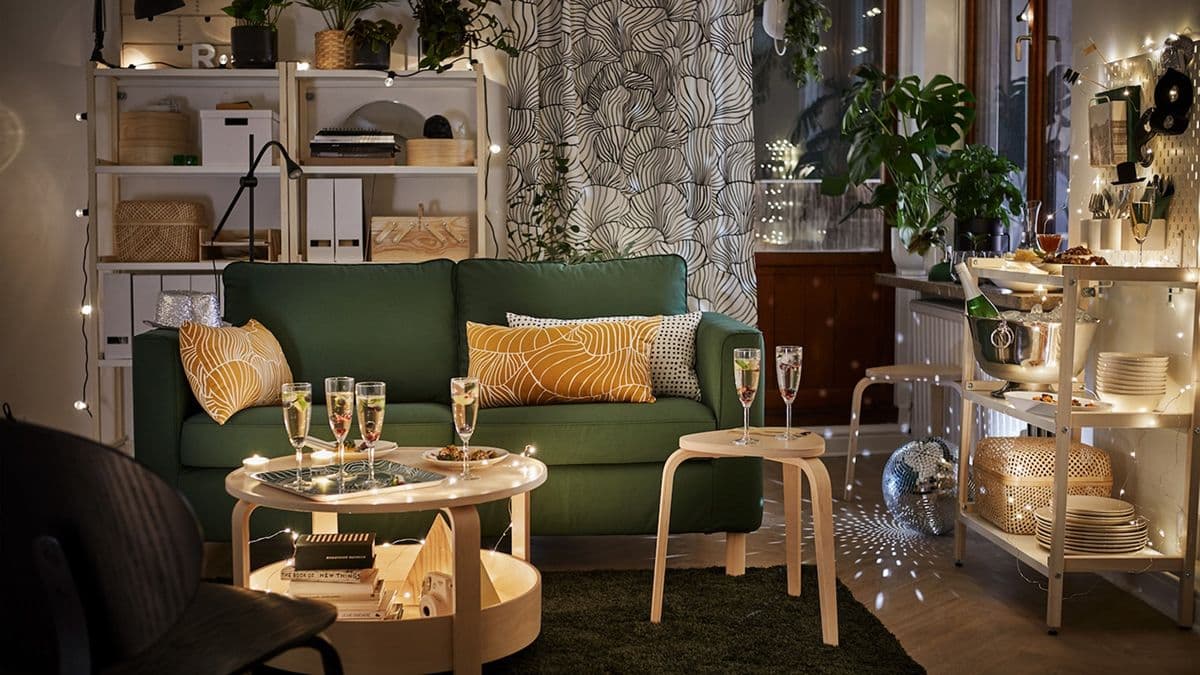
IKEA Leeds · Coordinated sofa solution with add-on styling
01
Function-First Grouping
Primary grouping by function (sleep/no-sleep) before style or family, aligned to how customers actually shop. This single decision made the range dramatically easier to read and navigate.
02
Hot-Spot Planning
Top families and key messages positioned at aisle prolongations, the highest-dwell, highest-visibility positions in the compact. Hot spots carried commercial priority, not just visual interest.
03
Price/Quality Ladder
Lowest, mid, and high-price tiers made visible and comparable. Low-price framed with accessibility; high-price framed with story and context. Customers needed to feel confident at every tier.
04
Width & Depth Display
Racking and fronta/repetition techniques created impact without clutter. Calm palette as the base, stronger colours used selectively to attract attention, not as a default.
05
Add-On Integration
Accessories positioned with seating throughout, not in a separate section. Podiums and perimeter breaks used to punctuate the compact with seasonal stories and complete-room inspiration.
Outcomes_006
The department rebuild delivered a clearer range overview and a more inspiring journey through the seating offer, with visible price ladders, top-family prioritisation, and stronger add-on sales storytelling. The flexible compact design accommodated future range shifts and local market needs without structural changes. Outcomes are directional, no commercially sensitive metrics are published.
Key Outcome
A function-first Living Room compact rolled out across IKEA UK & Ireland, delivering clearer range overview, stronger first impressions, and a flexible structure that adapts to evolving ranges and local store footprints without redesign.
Client
IKEA Systems BV
Via
IKEA UK & Ireland, Retail Design / Com&In
Reflection_007
Balancing global brand guidance with local store constraints was the central challenge, and the most valuable lesson. The strongest levers were function-first grouping, hot-spot planning, and clear price/quality ladders: they make a wide, complex range readable without simplifying it. It also reinforced how small, consistent VM decisions, repetition, fronta, fabric sampling positioned at the right moment, help customers compare faster and feel more confident. If I were to revisit it, I'd invest more in measuring the commercial impact of specific hot-spot placements to build a stronger evidence base for future compact decisions.
