AI Portfolio Build
A fully custom portfolio website designed and built collaboratively with AI agents, from content strategy and UX through to a live Next.js + Sanity CMS deployment. Concept to live site in under 2 weeks.
This portfolio site is itself a case study, built to demonstrate what a designer with 13+ years of experience can produce when AI agents are used as genuine collaborators across every phase of a project. The challenge was building a high-quality, production-ready portfolio without a development team, a large budget, or weeks of spare time. Using Claude for strategy and content, Claude Code for development, and Copilot for in-editor assistance; the entire site, design system, 8 case studies, CMS integration, and live deployment, was completed in under 2 weeks alongside full-time employment.
Building a portfolio that accurately represents 13+ years of cross-disciplinary design work, UX/UI, industrial design, retail spatial design, and CRO, typically would've required a developer, a designer, a copywriter, and weeks of production time. The constraints here were real: no development team (though I did get help and support from a developer friend), no extended timeline, and a need to present complex, multi-discipline work in a single coherent website. The question was whether AI agents could genuinely replace those missing collaborators, not just generate "Thought Leadership"", but actively contribute to decisions about structure, content, design, and code.
Research focused on two questions, what makes an effective portfolio for senior design roles, and what AI-assisted workflows could genuinely replace traditional production processes. Competitor portfolio analysis across UX, industrial, and CRO disciplines, In conjunction with open bar sessions with my peers, informed the content structure and case study depth. The orthographic drawing aesthetic, sticky left column layout, and modular block system all emerged from this research phase, developed in conversation with Claude across multiple sessions before a single line of code was written.
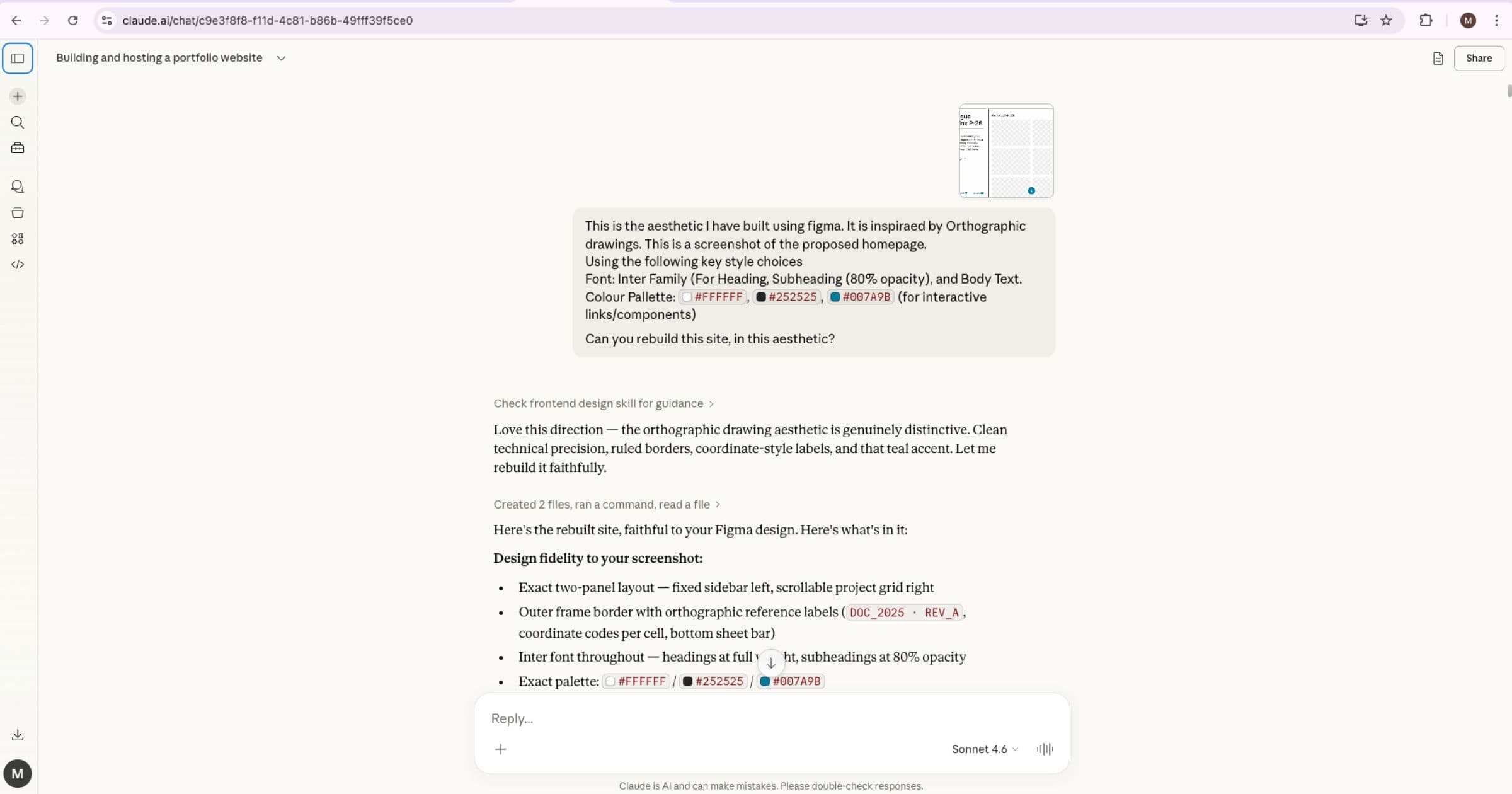
The process was deliberately sequenced, content before code, structure before styling, each phase validated before the next began. Claude acted as the primary collaborator across strategy, content, and design decisions. Claude Code handled all development. A friend (frontend developer) assisted with initial deployment and education on how each system would talk to each other and deploy the website. The entire workflow ran across two platforms: Figma, MS Copilot & Claude.ai on MacBook for content and design, and Claude Code on PC for development and launch.
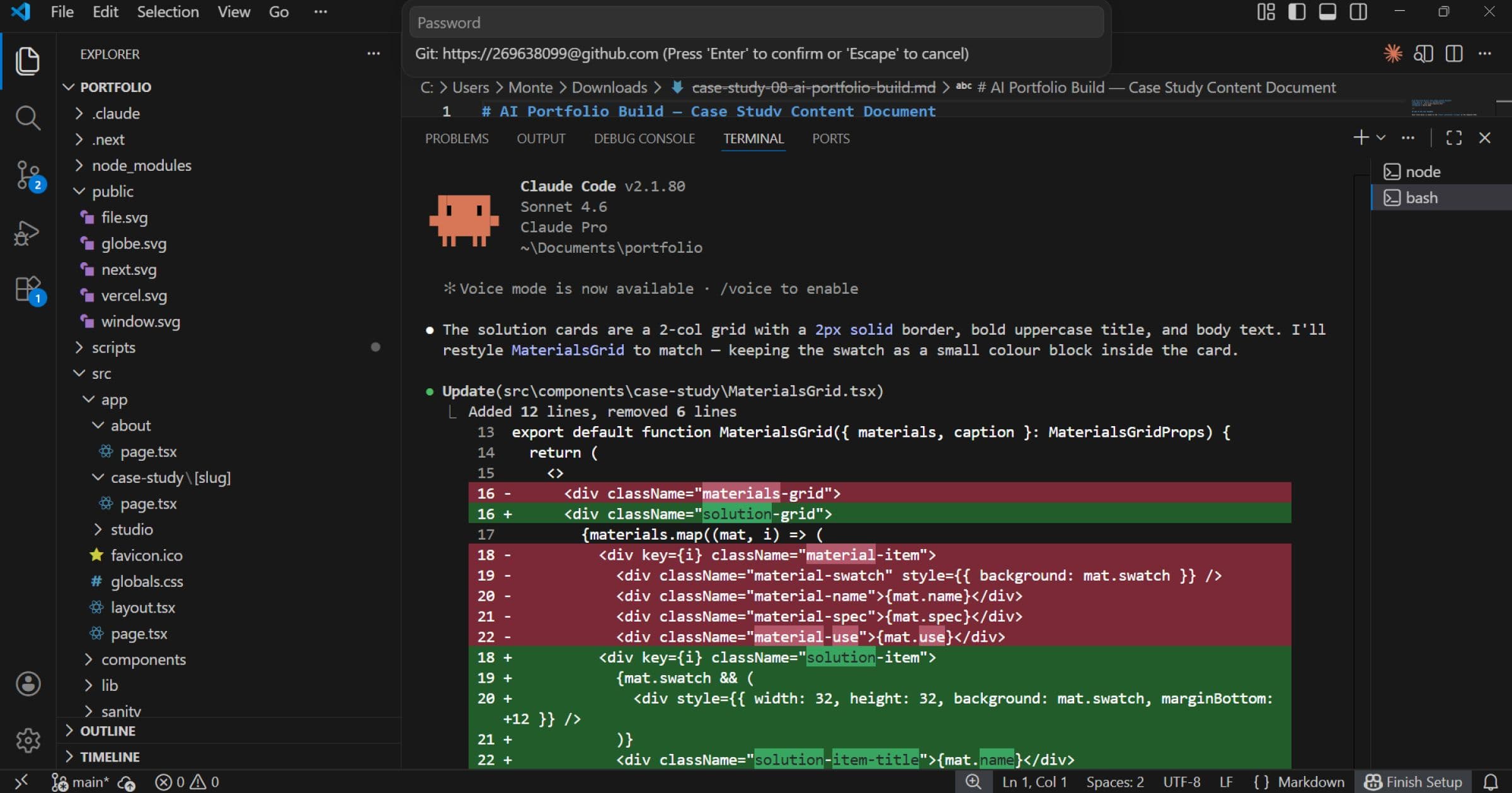
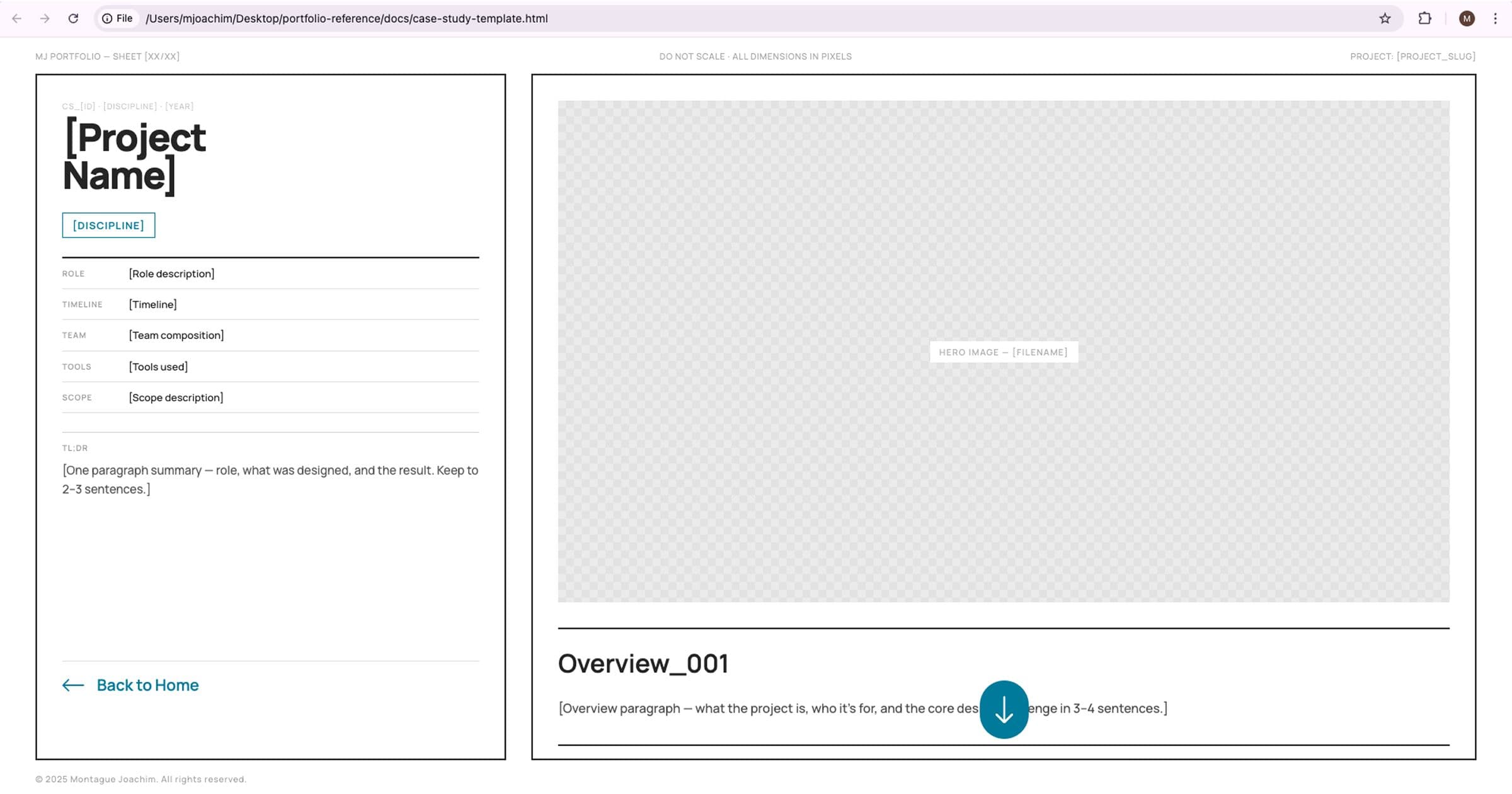
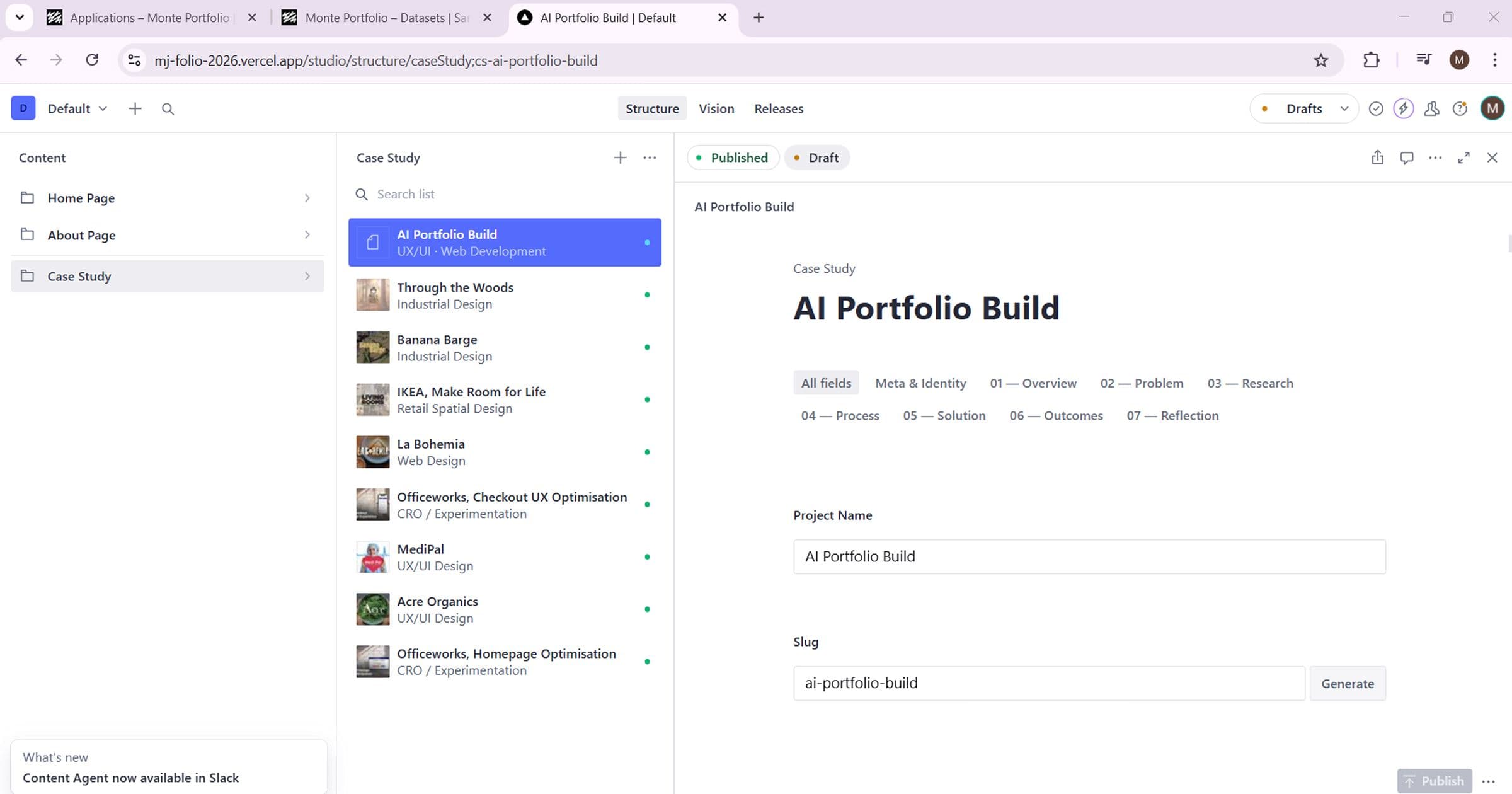
A production-ready portfolio site built on Next.js App Router with Sanity CMS, deployed to Vercel, fully content-managed, and built entirely through AI-assisted workflows. The site presents 8 case studies across 4 design disciplines in a single coherent design system, with a modular block architecture that adapts to each project's content without custom code per case study.
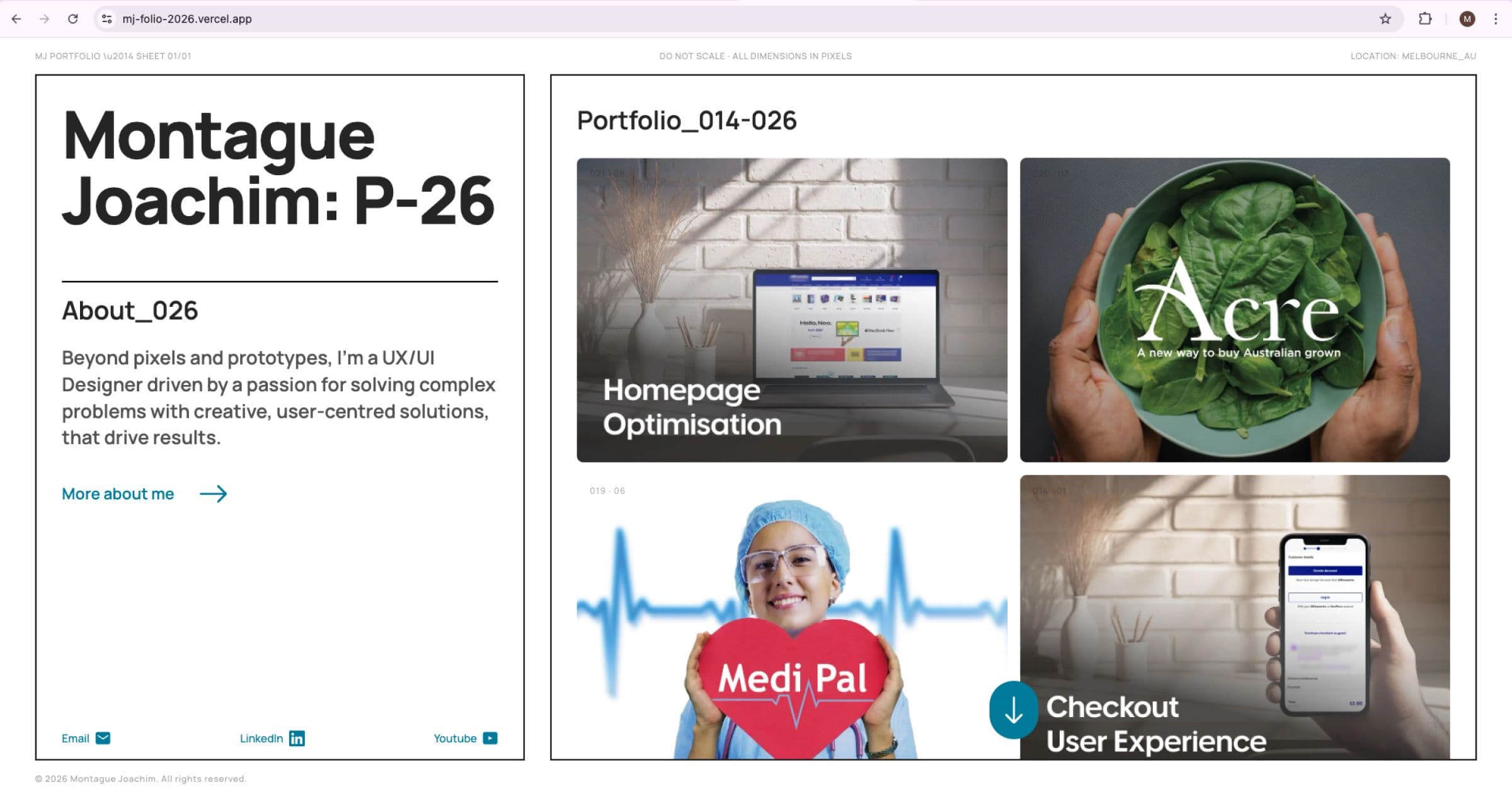
A production-ready portfolio website, live at montaguejoachim.com.au, built in under 2 weeks alongside full-time employment, with no development team and no prior Next.js experience. 8 case studies across 4 design disciplines presented in a single coherent system. All content managed through Sanity CMS, deployable without touching code. The build demonstrated that AI agents can genuinely replace traditional production roles when used as structured collaborators rather than autocomplete tools.
The most important lesson was that AI agents work best when given structure, not open-ended prompts. Every phase that went smoothly had clear inputs: - HTML templates as visual source of truth - Markdown (.md) files as content source of truth - Explicit ACTIVE BLOCKS tables, to exact placeholder mappings. Every phase that needed rework was where those inputs were missing or ambiguous. The second lesson was sequencing, content before code, structure before styling, one validated phase before the next. If I were to do this again I'd invest even more time upfront on the content documents before touching Claude Code. The seed script that auto-populated all 8 case studies in Sanity was the single most time-saving moment of the entire build, and it only worked because the .md files were structured precisely enough for Claude Code to parse without guessing.